
3D printing for small businesses in Prague: prototypes, jigs, and replacement parts
How small businesses in Prague can use 3D printing for prototypes, jigs, fixtures, replacement parts, low-volume components, and practical problem solving.
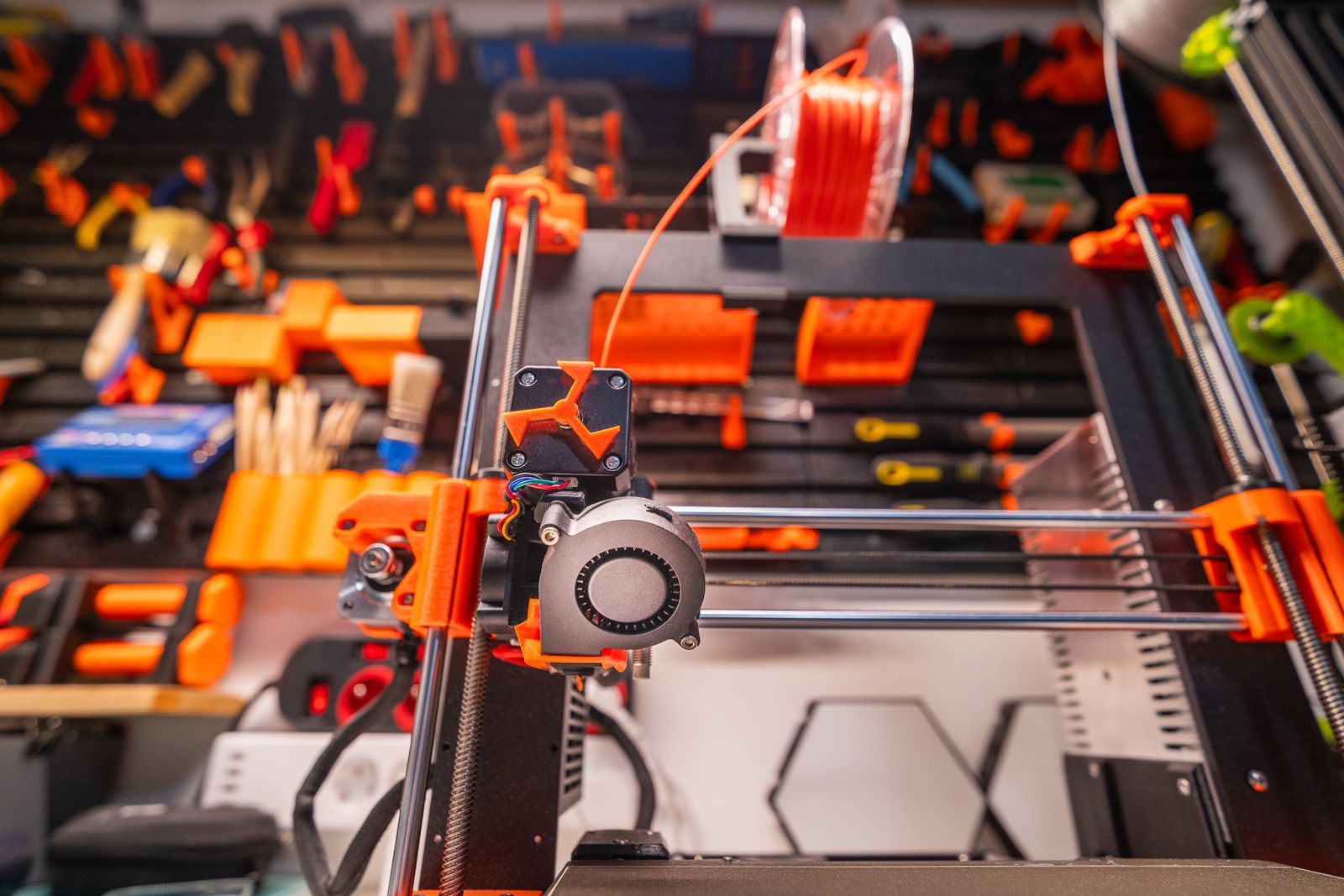
3D printing for small businesses in Prague: prototypes, jigs, and replacement parts
Short answer: small businesses can use 3D printing for prototypes, jigs, fixtures, replacement parts, custom brackets, test pieces, tooling aids, and low-volume components without committing to expensive tooling or large production runs.
If your business needs a practical plastic part in PLA, PETG, or ASA, you can request a quote from Forgefront 3D. Pickup in Prague and shipping across the EU are available.
How can a small business use 3D printing?
Small businesses often need parts that are too specific to buy off the shelf and too low-volume for traditional manufacturing. That is where 3D printing fits well.
A cafe might need a small replacement clip for equipment. A workshop might need a drill guide, spacer, or fixture. A product team might need a prototype enclosure. A retailer might need a custom display bracket. An electronics business might need a small run of housings for test units.
The common pattern is simple: the part has a job, the quantity is low, and speed matters. 3D printing can turn a file or design idea into a physical object without waiting for tooling.
What are jigs and fixtures, and why are they useful?
Jigs and fixtures are helper tools. A jig guides a repeated action, such as drilling, positioning, cutting, checking, or assembling. A fixture holds something in place. They may not be part of the final product, but they can make work more consistent.
For small businesses, custom jigs and fixtures can be surprisingly valuable. They reduce repeated measuring, make assembly easier, and help staff perform a task the same way each time.
3D printing is useful here because these tools are often custom to one workflow. You may only need one or five, not five thousand.
How does 3D printing help with prototyping?
A prototype lets you test an idea before investing in production. It can answer practical questions: Does the part fit? Is the enclosure big enough? Are the holes in the right place? Is the handle comfortable? Does the cable route make sense?
For early prototypes, the goal is learning. PLA may be enough to test size and shape. PETG may be better for functional testing. ASA may be useful if the prototype needs outdoor exposure or better heat resistance.
Because design changes are normal, local printing can be helpful. You can print a version, test it, adjust the model, and request another iteration.
Can 3D printing replace business equipment parts?
Sometimes. Replacement parts are a strong use case when the original part is unavailable, overpriced, delayed, or only sold as part of a larger assembly. Examples include knobs, clips, covers, brackets, adapters, spacers, and small protective pieces.
The key is understanding the part’s job. A cosmetic cover is different from a loaded safety-critical component. A replacement part should be reviewed for material, wall thickness, heat exposure, and fit.
If there is no 3D file, the part can sometimes be modeled from scratch from photos, measurements, or the broken original. That design work is additional, but it can still be worthwhile when the alternative is downtime or replacing a whole unit.
What should businesses send for a quote?
Send a file if you have one. STL, STEP, OBJ, and 3MF are accepted. STEP is especially useful for CAD-designed business parts. Include quantity, material preference, deadline, color, finish expectation, and whether the part needs to fit another object.
If you do not know material, ask for a recommendation. If appearance matters, say so. If function matters more, say that too. Painting is not currently offered, but other finishing or assembly needs can be discussed.
Quote replies are typically sent within one business day. Production and delivery depend on the job size and complexity. For local customers, pickup in Prague may be convenient; EU shipping is available when needed.
What makes a good first business project?
A good first 3D printing project has a clear purpose and low risk. Start with a part that helps the business learn: a test fixture, a prototype housing, a replacement cover, a bracket, a spacer set, or a simple internal tool. These jobs are useful because success can be judged quickly. Either the part fits and helps, or the next revision is obvious.
Avoid making the first project a safety-critical component, a part with unknown load requirements, or something that must meet formal certification. Those jobs may need engineering review outside a small print workflow. A practical first print should solve a contained problem and teach you how 3D printing can fit into your operations.
It is also worth thinking in versions. Version one can prove the shape. Version two can improve strength or usability. Version three can become the small batch. That is where 3D printing is especially useful for small businesses: you do not have to know everything before the first physical part exists.
Ready to test an idea or solve a small operational problem? Send the project details here.
FAQ
Is 3D printing good for low-volume business parts?
Yes. It is often best when you need one to dozens of parts and the design may still change.
Can you make the 3D file for us?
Yes, model creation from scratch can be discussed as additional paid work. Photos, sketches, and measurements help.
What is the maximum print size?
The current printable volume is about 250 x 210 x 220 mm. Larger parts may need to be split.